
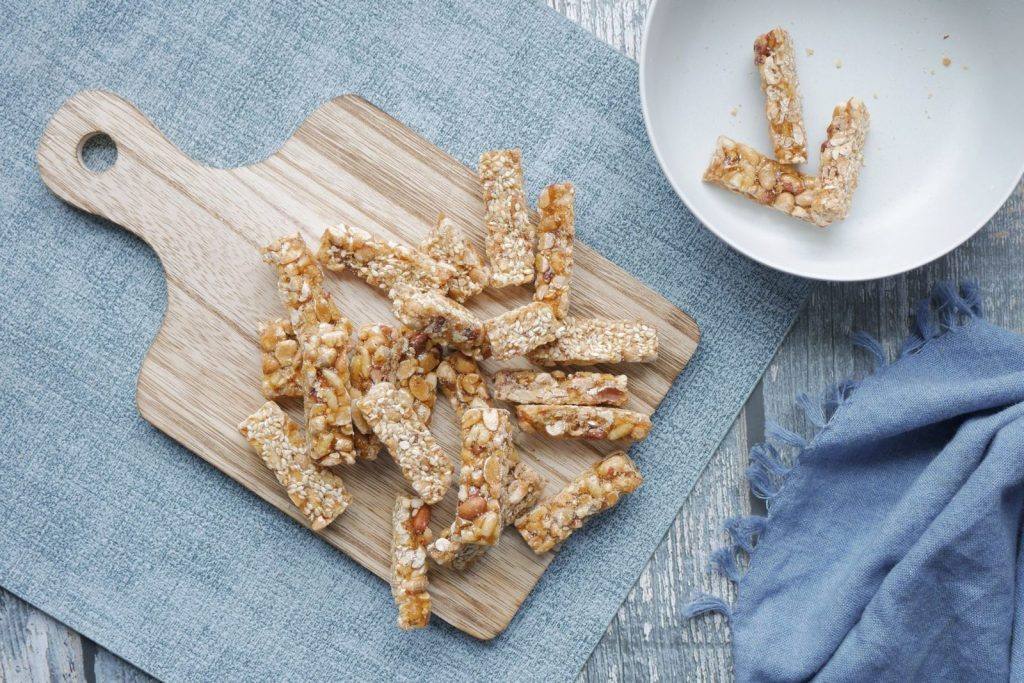
Muesli bars, oat bars and energy bars often stand next to each other on the shelf, and their names are used almost interchangeably. There are, however, real differences in what they are made of and what they are good for.
What is a muesli bar?
A muesli bar is based on a mix of grains or grain flakes, combined with dried fruits, seeds or nuts, pressed or baked into a bar. The mix is usually varied: the idea is to put a small portion of muesli into a form you can carry.
What is an oat bar?
An oat bar is a type of grain bar in which oats are the dominant ingredient. Oats give the bar a softer, chewier texture and contain beta-glucan, a soluble fibre.
Oats are naturally free of gluten, but they are often contaminated with wheat, barley or rye during growing and processing. For people who must avoid gluten, only oats specially produced as gluten-free are suitable.
And the energy bar?
Energy bar is a name for purpose rather than recipe: it is a bar designed to give quick energy, typically from dried fruits, seeds and grains. Energy bars are popular for sport, hiking and long working days.
What to check on the label
- The order of ingredients: the first ingredient is the one used in the largest amount
- Sugar: the no added sugars claim means nothing was added for sweetness, but fruit can still contain natural sugars
- Fibre and protein content per 100 g, if these matter to you
- The gluten-free label, if you need to avoid gluten
Which one to choose?
For a varied, filling snack a muesli bar is a good choice. If you like a softer texture and want oat fibre, choose an oat bar. For sport or a long day on the move, an energy bar is the practical option. In every case, the label tells you more than the name on the front.
About Deom
Deom is a Hungarian contract manufacturer of exclusively gluten-free muesli and energy bars, produced without added sugar unless the client asks for it.
 EN
EN  HU
HU